Short horizontal black line on a white background

COMMERCIAL TREE SERVICES
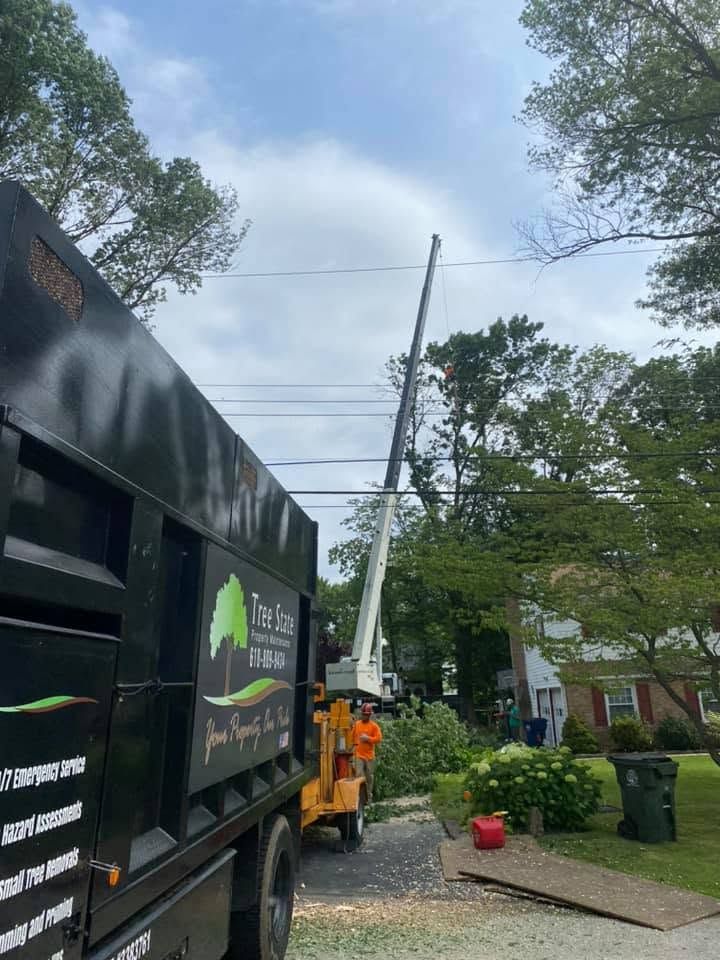
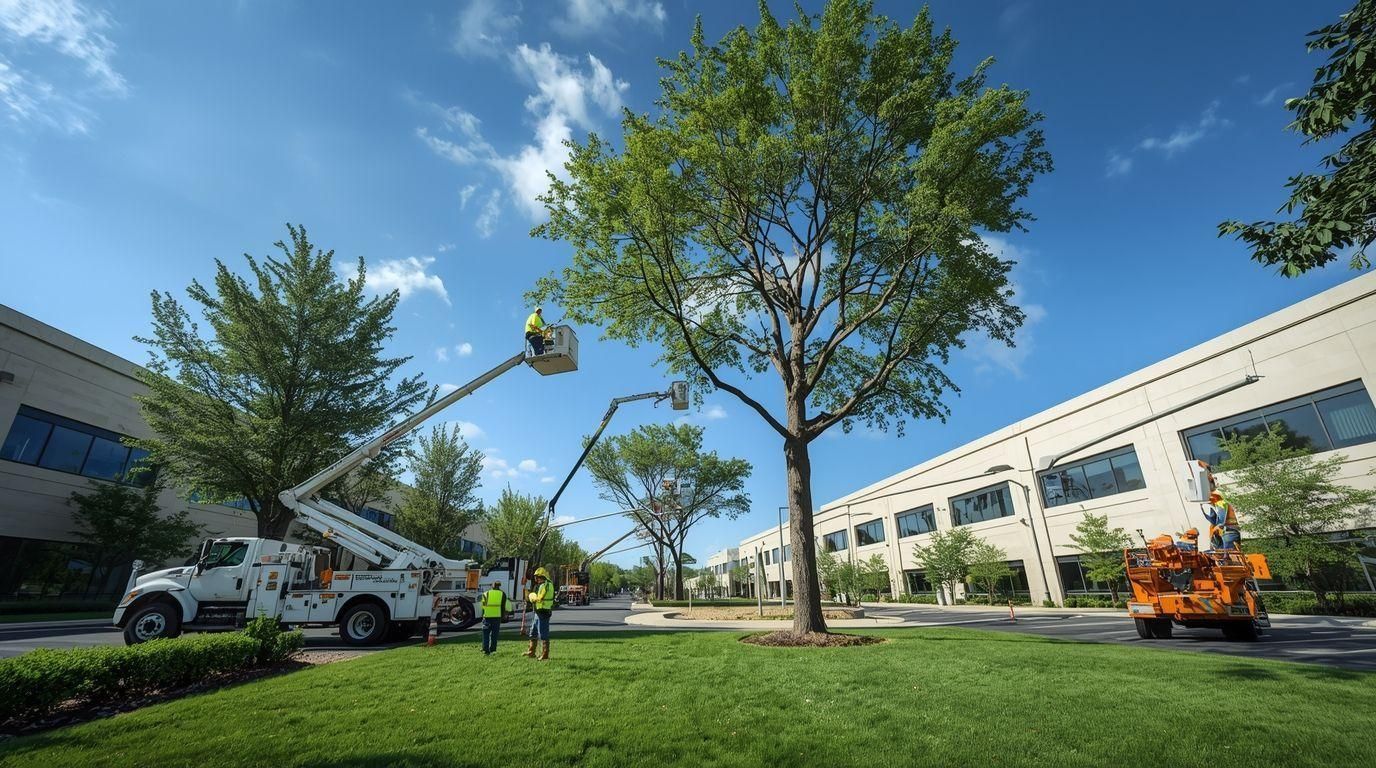
In Pennsylvania, a property owner is expected to find and address hazards a business visitor could not reasonably discover, and a dead limb over a parking stall counts as one. Tree State Property Maintenance provides commercial tree services in Trainer, PA for retail centers, apartment communities, industrial sites, HOAs, and municipal grounds: hazard surveys, scheduled pruning, removals, storm response, and stump grinding. Licensed and insured, and set up to work around your operating hours rather than straight through them.
Two workers in hard hats crouch on a rooftop, working on the roof structure under a cloudy sky.
Person carrying wooden planks on a rooftop under a blue sky

WE WORK AROUND YOUR OPERATION, NOT THROUGH IT.

Tenants need to park, trucks need to back in, and customers need a clear front door. So we phase the work: one section at a time, cones and spotters where traffic crosses the zone, lanes reopened before the crew breaks. Nothing about the schedule or the staging is a surprise on the morning of the job. Certificates of insurance, site-specific plans, and off-hours scheduling are all normal requests here, not special ones. Give us the constraints and we will build the sequence around them before anybody quotes a number.

✓ Certificates of insurance on request

✓ Night, weekend, and phased scheduling

✓ Traffic control through the work zone

✓ Site left clear at the end of each shift

Black horizontal line on a white background
COMMERCIAL TREE SERVICES
A CLOSED LOT COSTS MORE THAN THE TREE WORK.
Every hour a lane is blocked, a dumpster is unreachable, or a storefront is roped off is an hour the property is not doing its job. That is the real cost of unplanned tree work, and it is almost always avoidable. Trees fail on their own timetable, but scheduled pruning, hazard surveys, and staged removals move the disruption to a window you chose instead of one a storm chose for you.
DELAWARE COUNTY BUSINESSES CANNOT CLOSE FOR A TREE.
The commercial properties around here sit on narrow frontage with shared access drives and utilities running along the lot line. There is rarely a spare corner to stage equipment in. We solve that with smaller machines, tighter drop zones, and work sequenced to the hours when the lot is quiet, whether that means before opening, after closing, or on a Sunday morning when nothing is moving.
PROPERTY MANAGERS DO NOT LIKE SURPRISES. NEITHER DO WE.
Managers and facility teams have told us the same thing for 10 years: tell us what you are doing, when you are doing it, and what it will look like when you leave. So the proposal comes with a sequence, the crew arrives when the calendar says, and the site gets photographed before and after. If something changes on the ground, you hear it from us first.
WHY CHOOSE US FOR COMMERCIAL TREE SERVICES.
Documentation Your File Needs
Insurance certificates, scope sheets, and before-and-after photos come standard, not on request. When an owner, a board, or a tenant asks what was done and why, the answer is already sitting in your records with the dates attached.
Work That Fits Your Calendar
Retail hours, tenant leases, delivery windows, and event schedules all shape when a crew should be on site. Tell us the constraint and the work gets built around it, including overnight and weekend shifts when the property needs them.
Risk Reduced Before It Is Reported
A hazard survey finds the dead limb over the walkway before a tenant does. Addressing it on a planned visit is cheaper, quieter, and considerably less complicated than dealing with it after something has already come down on its own.
Access That Stays Open
Lanes, fire routes, loading docks, and accessible parking do not get blocked for the convenience of the crew. Cones, spotters, and staged sections keep the property usable while the work moves across it from one end to the other.
One Number For Every Property
Managing several sites should not mean managing several vendors. The same crew, the same standard, and the same point of contact cover every address on your list, which makes scheduling and billing considerably simpler at the end of the month.
Storm Coverage That Answers
When a front comes through overnight, commercial properties are competing for the same crews by morning. A 24/7 line and an existing relationship put your lot higher on the list than a cold call does at 6 a.m.
Thin black horizontal line on a white background

our services

OUR COMMERCIAL TREE WORK
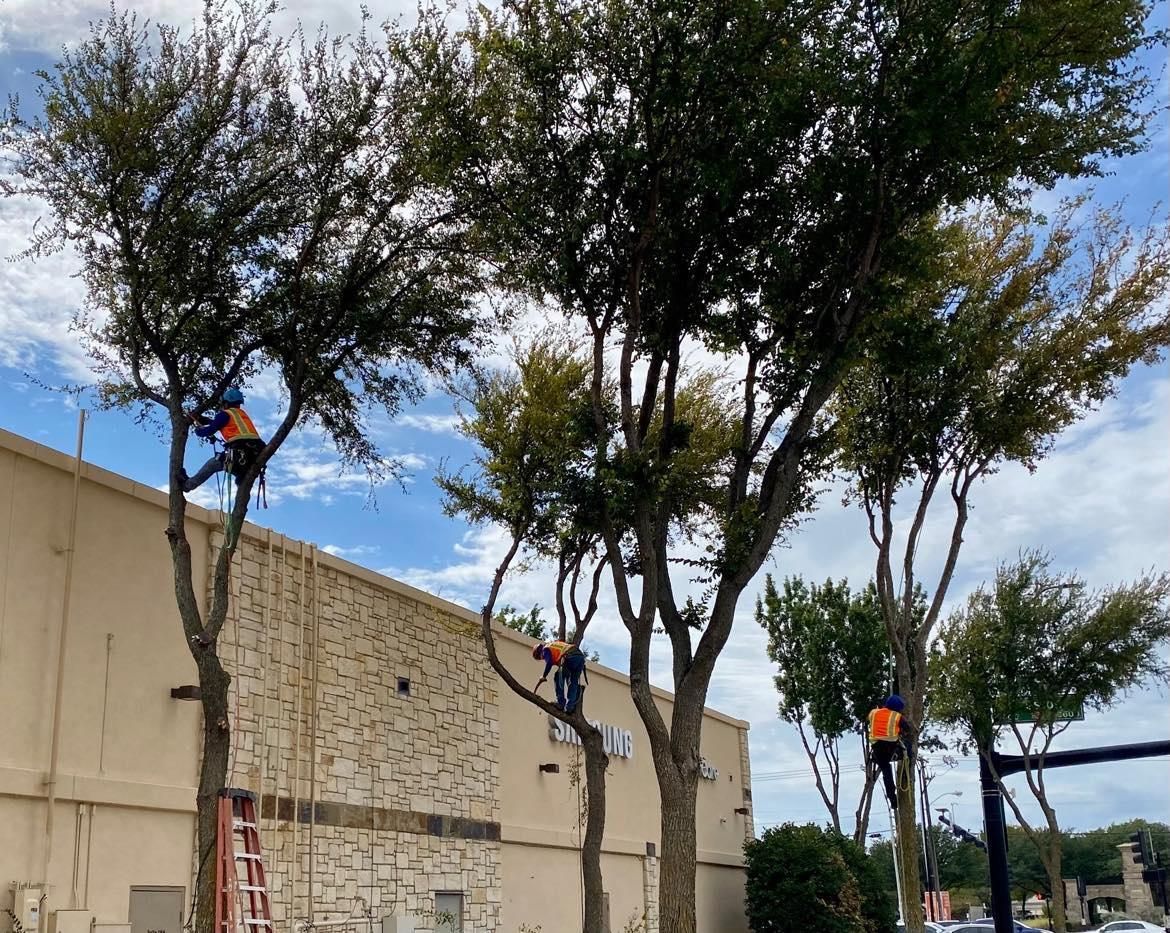
Commercial sites usually need a mix of scheduled maintenance and reactive work. These six cover both, and most properties end up on some combination rather than picking one and leaving the rest.
Person carrying wooden planks on a rooftop under a blue sky
SITE SURVEY
Commercial Tree Inspections

Every tree on the property gets looked at and recorded: species, condition, proximity to structures and walkways, and any defect worth watching. The result is a prioritized list you can budget against instead of a guess. Photos included.
Two workers in hard hats repairing a shingled roof under a cloudy sky.
ROUTINE PRUNING
Scheduled Maintenance Pruning

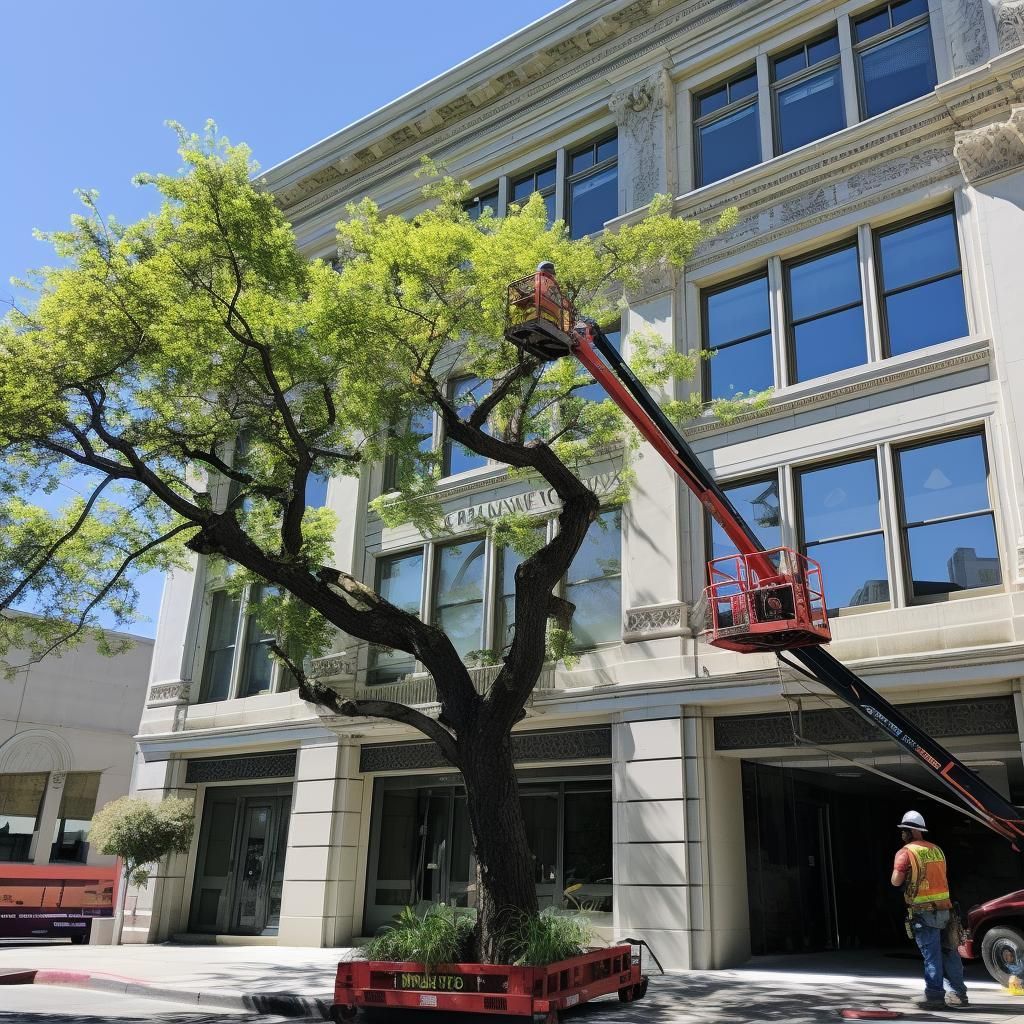
Canopies over lots, walkways, and signage get pulled back on a set cycle so clearance never becomes an issue between visits. Regular light pruning also keeps individual jobs small and the disruption to a couple of hours at most.
Two roofers wearing hard hats work on a shingled roof, one kneeling and one leaning forward.
LOT CLEARING
Removals and Lot Clearing

Whether it is one failing tree beside a loading dock or a whole strip of overgrowth along a fence line, removals are sequenced to keep access open and finished with grinding and full debris haul-off the same day.
House roof with steam or smoke rising from a damaged section near the gutter
STORM RESPONSE
Emergency Commercial Response

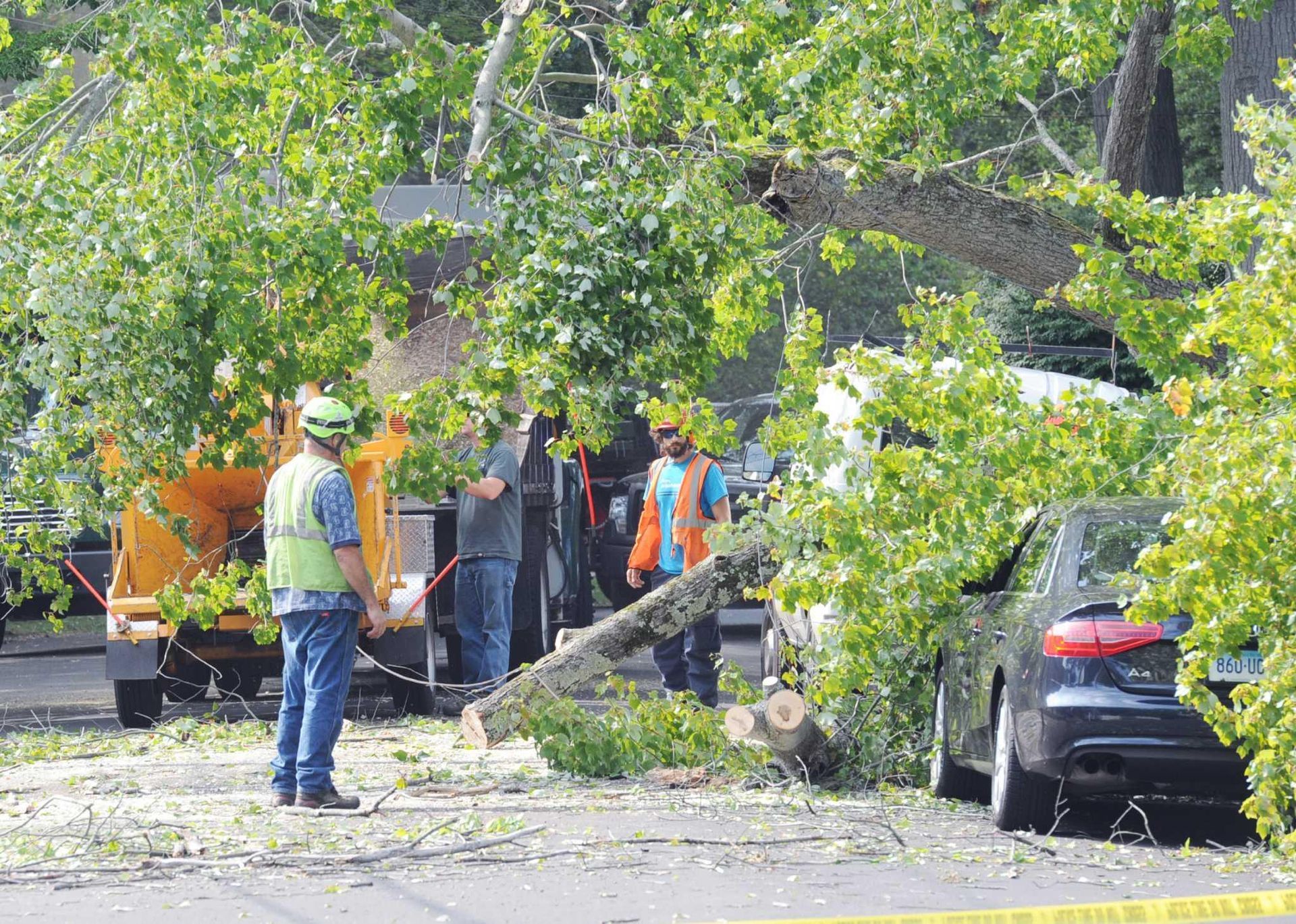
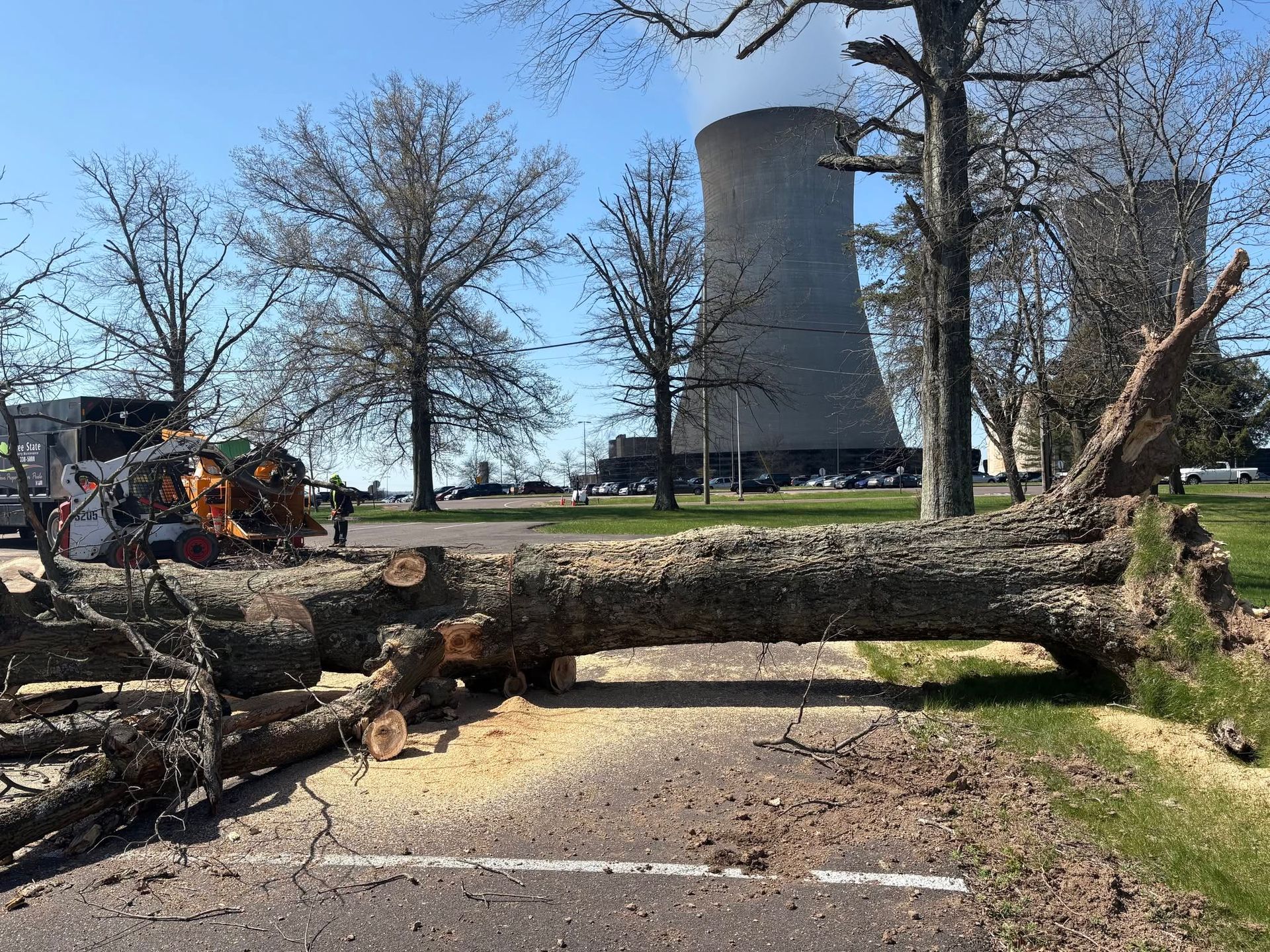
After a storm the priority is making the site usable again: clearing entrances, freeing blocked lanes, and removing anything hanging over an area people walk through. Longer repairs get scheduled once the property is safe to use again.
Two workers on a shingled roof, one kneeling with a hammer and one sitting nearby under a cloudy sky
SIGHT LINES
Signage and Lighting Clearance

Overgrowth that swallows a monument sign or blocks a pole light costs you visibility and makes the lot feel darker than it is. Selective pruning restores both without leaving the trees looking hacked at. Cameras see better too.
Snow-covered rooftops under a clear blue sky
STUMP WORK
Stump Grinding for Commercial Sites

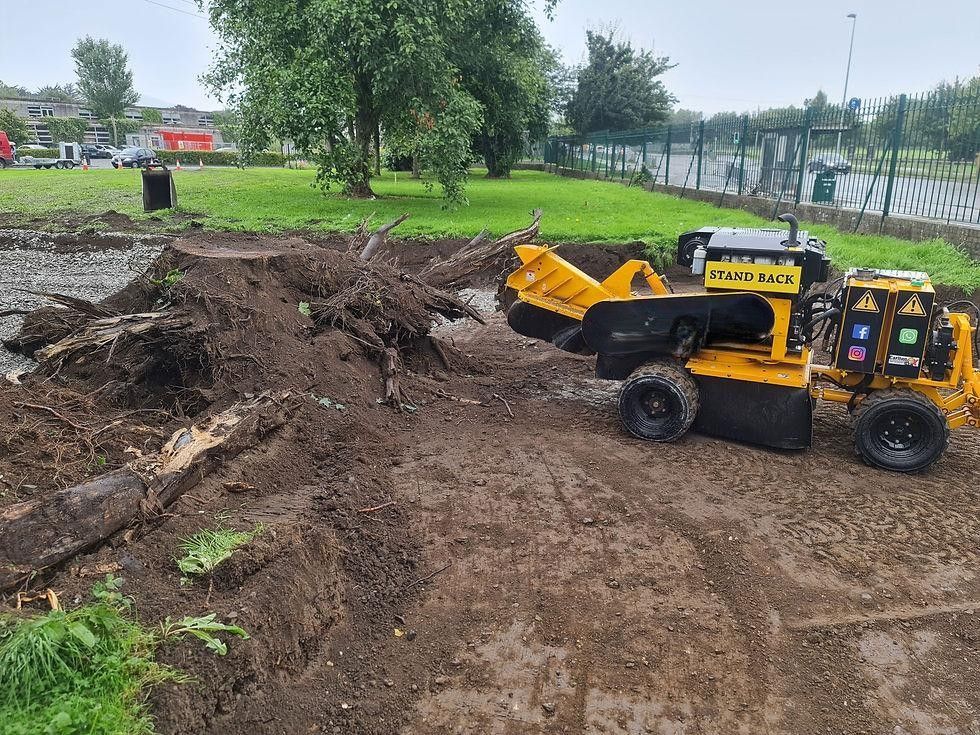
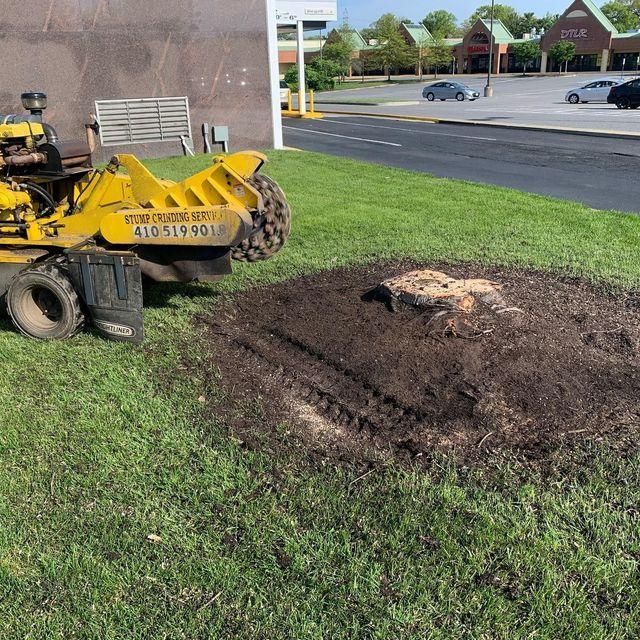
Stumps in a parking island or a lawn strip are a trip hazard and a mowing obstacle. Grinding them below grade lets the area be backfilled, paved over, resodded, or replanted as part of the same scheduled visit.
Black horizontal line on a white background

Real Reviews · Real Customers

WHAT OUR CLIENTS SAY.

Property managers who come back tend to cite the same reasons: the crew shows up in the window it promised, the lot reopens on time, and nobody had to chase anyone for paperwork. Read what they wrote about working with us.
Black horizontal line on a white background
Common Questions
FREQUENTLY ASKED QUESTIONS.
The questions we field most often from property managers, boards, and business owners about scheduling, liability, documentation, and keeping a commercial site running while tree work is underway.

Who is liable if a tree on commercial property injures a visitor?

Pennsylvania holds property owners to a duty of reasonable care toward business visitors, which includes hazards they should have discovered. Documented inspections and prompt corrective work are the strongest evidence that the duty was met. Speak with your insurer as well.


Can tree work be scheduled outside of normal business hours?

Yes, and on busy sites it usually should be. Early mornings, evenings, and weekends keep lanes and entrances clear during trading hours, and quieter conditions make traffic control around the drop zone considerably simpler for the crew as well.


How do you protect parking lot surfaces and curbing during tree work?

Outriggers get padded, mats go under tracked equipment, and heavy rounds are lowered rather than dropped onto asphalt. Damage to a lot almost always comes from impact or point loading, and both are avoidable with a bit of planning ahead.


What does a commercial tree inventory involve?

Tree State Property Maintenance walks the whole property, records each tree's species, size, condition, and location, and flags defects by urgency. Across Trainer, PA, managers use that list to budget maintenance instead of reacting to failures one at a time.


How much notice do tenants need before tree work begins?

A few days is usually enough for parking and access notices, longer if vehicles must be relocated. We provide the dates, the affected areas, and the expected duration in writing so the notice can go out accurately the first time.


What tree problems show up most often in commercial property inspections?

Deadwood over walkways and parking, limbs rubbing on rooflines and light poles, girdling roots in planting islands, and trees planted too close to buildings when the site was young. All four are correctable early, and none of them improve on their own.


Should a commercial property be on a scheduled tree maintenance plan?

For anything with tenants, customers, or public frontage, a cycle beats reacting. Tree State Property Maintenance builds plans around Trainer, PA sites so pruning, inspections, and removals land in planned windows rather than after a storm forces the issue.


What happens to signage sight lines when trees are trimmed at a business?

Clearance work usually improves them. Raising the canopy and thinning the lower branches opens views from the road without removing the tree, and the shape stays natural rather than looking cut to a straight edge with hedge shears.


    Black horizontal bar on a white background.
    HOW WE WORK

    FROM SITE PLAN TO SIGN-OFF, HERE IS HOW.

    LEARN MORE →

    Step-01

    Survey The Whole Property
    We walk every tree on the site, not only the one that prompted the call. Condition, location, and risk get recorded so the proposal reflects the property as a whole rather than a single problem.

    Step-02

    Propose The Work In Phases
    The scope arrives split into what is urgent, what is seasonal, and what can wait a year. Budgets rarely cover everything at once, so the list is built to be approved in pieces.

    Step-03

    Agree The Schedule And Access
    Dates, shifts, staging areas, and affected parking are all settled in writing before anybody mobilizes. You get what you need to notify tenants, and we get what we need to work without improvising on site.

    Step-04

    Set Up Traffic Control
    Cones, tape, and spotters go in before the first machine starts. Pedestrian routes get redirected clearly, and any lane closure is sized to the smallest area that lets the work happen safely and quickly.

    Step-05

    Work The Site In Sections
    One zone opens, gets finished, and closes before the next one starts, so the property is never fully tied up. Debris is cleared continuously rather than piling up for a single haul at the end.

    Step-06

    Document And Hand Back
    Before-and-after photos, the completed scope, and any new observations go into a short closeout summary. The lot reopens fully, and you have the record you need for owners, insurers, or the next budget cycle.
    Black horizontal line on a white background
    GET YOUR FREE ESTIMATE
    GET THE SITE ASSESSED, FREE.
    Send the address and we will walk the property, record what we find, and come back with a phased proposal you can take to an owner or a board. The assessment costs nothing. Start on the contact page.
    WHAT YOUR SITE ASSESSMENT COVERS:

    ✓ Every tree on the property recorded

    ✓ Defects ranked urgent to optional

    ✓ Phased scope you can approve in parts

    ✓ Access, staging, and traffic plan

    ✓ Insurance documentation up front

    ✓ Photos for your property file