Short horizontal black line on a white background

TREE TRIMMING & PRUNING
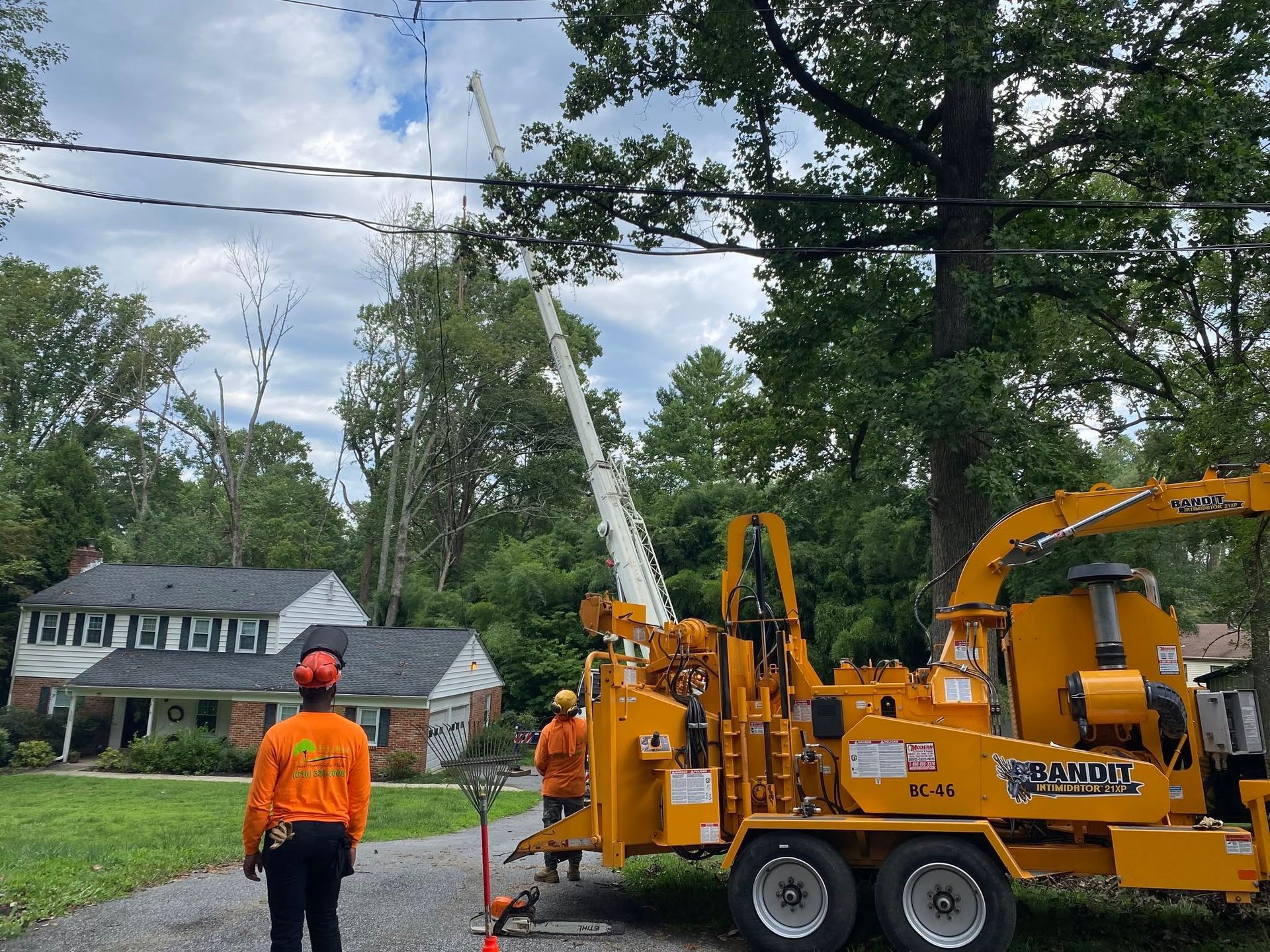
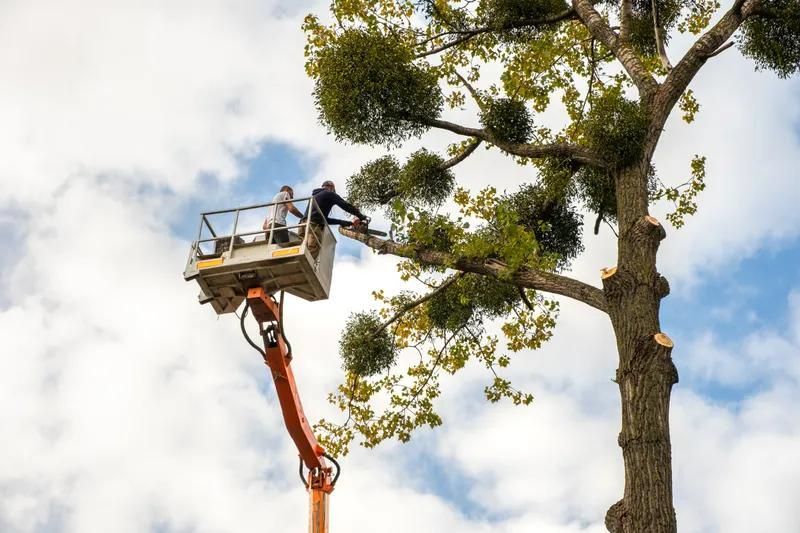
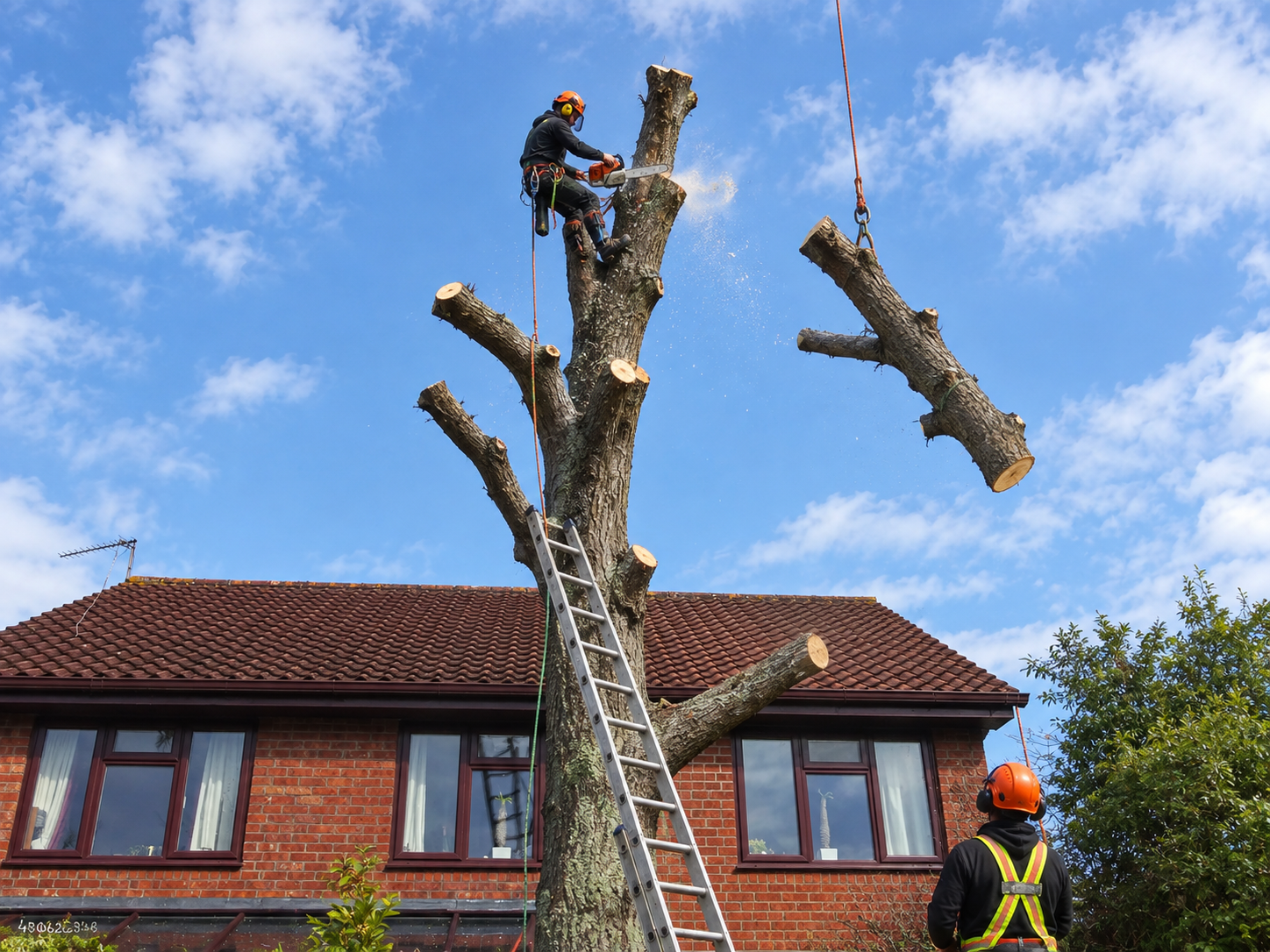
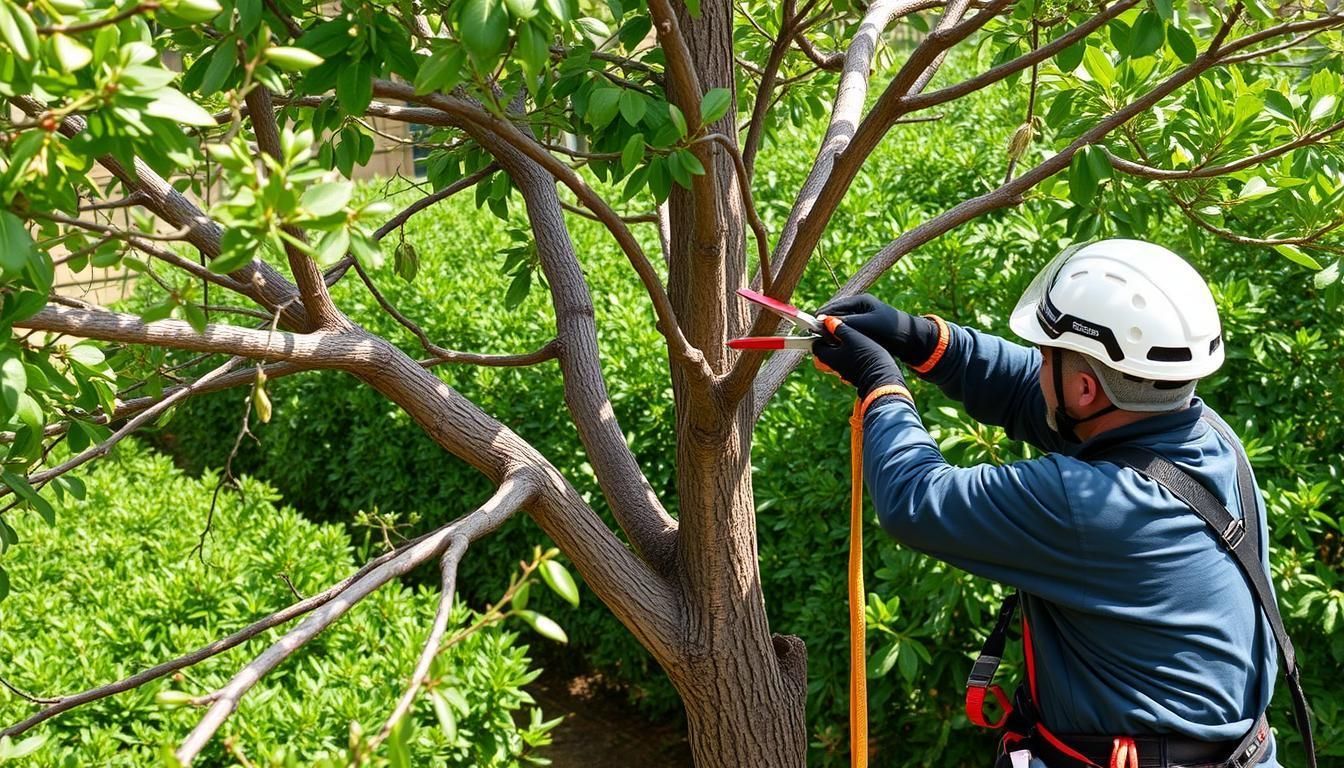
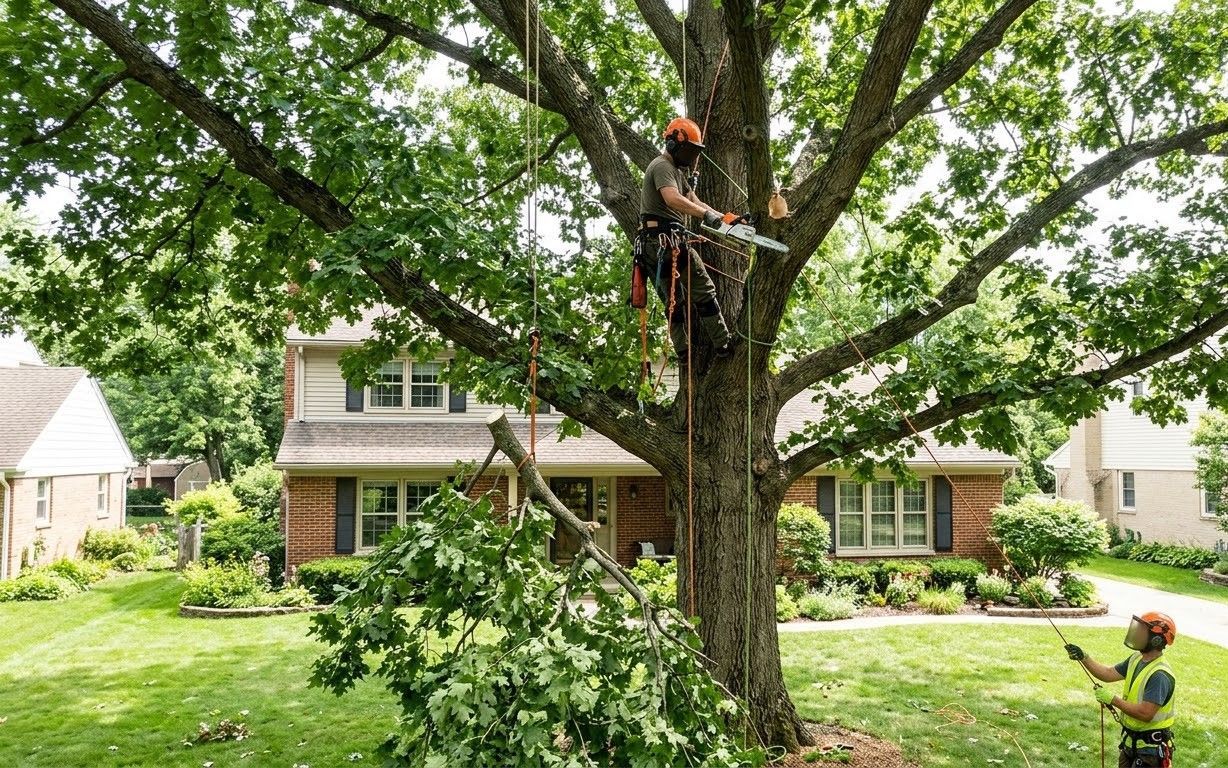
Every pruning cut is a wound, and a tree seals it only when the cut is made just outside the branch collar. That single detail, written into the ANSI A300 standard, separates pruning that helps from pruning that shortens a tree's life. Tree State Property Maintenance provides tree trimming and pruning in Trainer, PA: crown thinning, crown reduction, deadwood removal, structural pruning, and clearance work over roofs, drives, and walkways. Licensed, insured, and 10 years into making that cut correctly.
Two workers in hard hats crouch on a rooftop, working on the roof structure under a cloudy sky.
Person carrying wooden planks on a rooftop under a blue sky

GOOD PRUNING LOOKS LIKE NOBODY WAS THERE.

The best result is a tree that looks natural, just smaller, lighter, or further off the house than it was. No stubs, no flat-topped silhouette, no bare interior. We take out what is dead, crossing, or badly placed, and leave the branches that give the tree its shape. Most people notice the light before they notice the cuts. Every cut has a reason we can explain to you on the spot. If a branch is coming off, it is because of what it is doing to the tree, the structure beside it, or the light underneath it.

✓ Cuts made at the branch collar

✓ ANSI A300 pruning practice

✓ No topping, ever

✓ Debris chipped and cleared

Black horizontal line on a white background
TREE TRIMMING & PRUNING
PRUNING IS THE CHEAPEST INSURANCE A TREE EVER GETS.
A limb removed while it is still 3 inches thick costs a fraction of what the same limb costs after it comes through a roof. Regular pruning takes weight off overextended branches, clears deadwood before it falls on its own, and corrects structural problems while they are still small. Trees that get looked at every few years rarely become the emergency call at midnight in the middle of February.
RIVER WIND SHAPES EVERY CANOPY IN THIS COUNTY.
Trees near the Delaware grow into the prevailing wind, which means the weight often ends up on one side and the roots on the other. Add wet snow to a canopy already carrying an uneven load and something gives. Thinning and reduction rebalance that, so the tree sheds wind through the crown instead of levering against its own root plate all winter.
A BAD CUT LASTS LONGER THAN A GOOD ONE.
You can prune a tree badly in an afternoon and the tree will carry it for the rest of its life: decay entering a stub, a cluster of weak sprouts where a leader used to be, a wound that never closes. We have been called in to fix that work often enough to be careful about our own. Every cut here is placed deliberately, and none of them are made in a hurry.
WHY CHOOSE US FOR TREE TRIMMING & PRUNING.
Cuts Placed Where They Belong
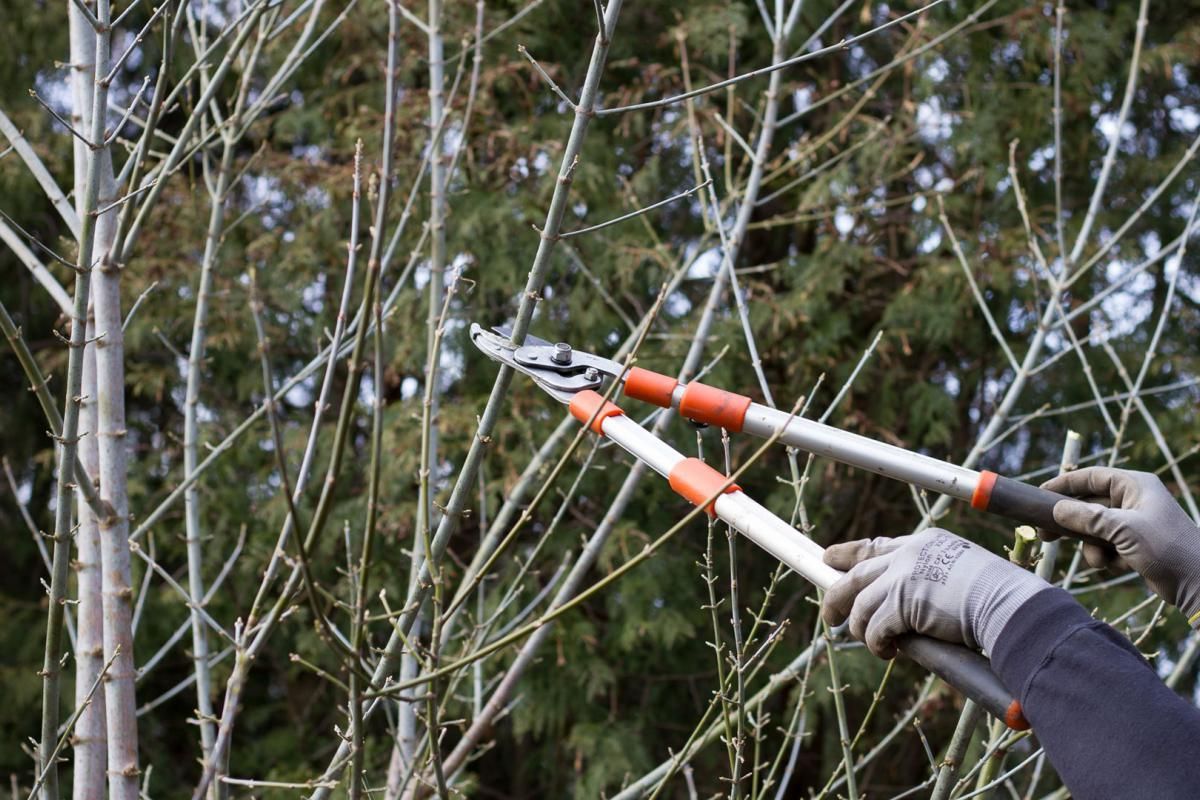
Pruning at the branch collar lets a tree close the wound on its own. Stubs and flush cuts do the opposite, and they are the most common damage we find on trees somebody else has already worked on.
A Shape That Still Looks Like A Tree
Nothing gets squared off, rounded over, or cut back to a uniform height. Reduction follows the tree's own branching, so the result reads as natural growth rather than as a haircut somebody gave it. The difference shows within a year.
Only What Needs To Come Off
Over-pruning stresses a tree and produces exactly the weak regrowth you were trying to avoid. We take the dead, the damaged, the crossing, and the badly placed, and we leave the rest of the canopy doing its job.
Clearance Where You Actually Need It
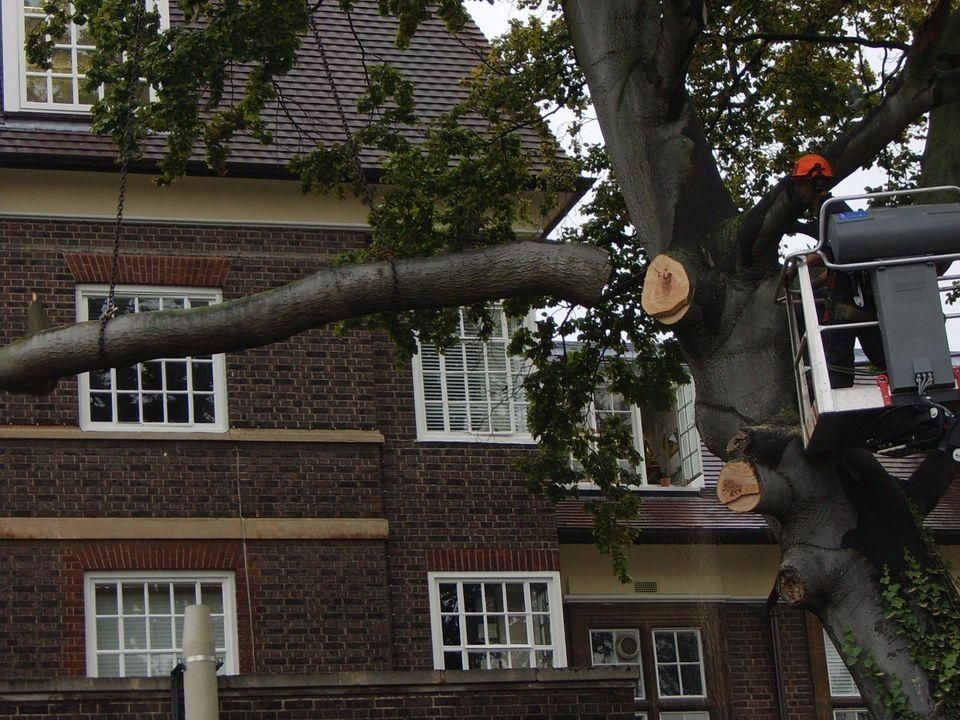
Roofs, gutters, driveways, walkways, sheds, and pool decks each need a different amount of room. Tell us what is getting hit, scraped, or shaded and the pruning gets aimed at that rather than at the tree in general.
Timing That Suits The Tree
Some species bleed if cut at the wrong point in the year, and some diseases spread through fresh wounds in warm weather. Where timing matters we will say so and schedule around it rather than working through the list regardless.
The Mess Goes With Us
Pruning generates more debris than people expect, most of it landing in beds and on lawns. Everything is chipped, the beds get cleared by hand, and the drive gets blown off before the truck pulls away. Nothing is left for next week.
Thin black horizontal line on a white background

our services

OUR TREE TRIMMING AND PRUNING WORK
Pruning covers a wide range of work, and the right one depends on what the tree is doing and where it is standing. These six are what most properties around here actually need.
Person carrying wooden planks on a rooftop under a blue sky
CANOPY LIGHT
Crown Thinning

Selective interior branches come out so light and air move through the canopy instead of stopping at a solid wall of foliage. Grass underneath recovers, and the tree carries less wind load in a storm. Both matter here.
Two workers in hard hats repairing a shingled roof under a cloudy sky.
SIZE CONTROL
Crown Reduction

When a tree has outgrown its space, height and spread come back to lateral branches capable of taking over as the new leaders. Done properly, the tree keeps its form and its ability to seal the wounds it is given.
Two roofers wearing hard hats work on a shingled roof, one kneeling and one leaning forward.
DEADWOOD
Deadwood and Hanger Removal

Dead branches do not announce when they are coming down. Clearing them removes the most predictable falling hazard on any mature tree, and it usually improves how the canopy looks at the same time. Two problems, one visit.
House roof with steam or smoke rising from a damaged section near the gutter
CLEARANCE
Building and Driveway Clearance

Branches touching a roof, blocking a gutter, scraping siding, or forcing trucks to duck get pulled back to a workable distance. The cuts are placed so the growth does not return to the same spot next season. It buys real time.
Two workers on a shingled roof, one kneeling with a hammer and one sitting nearby under a cloudy sky
YOUNG TREES
Structural and Formative Pruning

The spacing and angle of a young tree's main branches decide how it will hold up in 30 years. Early corrective cuts are small, quick, and remove the weak unions that later become expensive failures in a storm.
Snow-covered rooftops under a clear blue sky
ORNAMENTALS
Fruit and Ornamental Tree Pruning

Fruit trees, dogwoods, magnolias, and Japanese maples all respond to different treatment and different timing. These get pruned for form, airflow, and productivity rather than being treated like scaled-down shade trees. The difference shows up the following spring.
Black horizontal line on a white background

Real Reviews · Real Customers

WHAT OUR CLIENTS SAY.

Pruning reviews usually mention two things we like hearing: the tree still looks like itself, and the beds underneath were cleaner afterward than before we arrived. The before and after photographs tell the rest of the story. Have a look through them.
Black horizontal line on a white background
Common Questions
FREQUENTLY ASKED QUESTIONS.
Common questions about pruning mature and young trees, from how often it should happen to why the position of a single cut matters as much as the branch you remove.

How often should mature shade trees be pruned?

Every 3 to 5 years suits most established hardwoods, with a look at them in between if they sit over a house or a driveway. Young trees benefit from more frequent, much lighter attention every year or two.


What is crown reduction?

Crown reduction shortens a tree's height or spread by cutting back to living lateral branches large enough to become the new ends. The tree keeps a natural outline and can seal the wounds, unlike stub cuts at the same height.


Can pruning correct a tree that is growing lopsided?

Partly. Reducing the heavy side and encouraging growth on the light side improves balance over several seasons. A lean caused by root failure or a competing structure is a different problem and pruning will not fix it alone.


Do fruit trees need different pruning than shade trees?

Yes. Fruit trees are pruned for open centers, airflow, and fruiting wood rather than for structure alone. Tree State Property Maintenance handles both across Trainer, PA, and the approach changes completely between an apple tree and an oak.


Will pruning stop a tree from dropping seeds, sap, or fruit?

It reduces the volume but will not eliminate it. Thinning removes some of the flowering and fruiting wood, and clearance pruning moves the drop zone away from cars and walkways, which is usually the real complaint in the first place.


Should pruning cuts be painted or sealed?

No. Wound paints trap moisture against the cut and slow the tree's own sealing process. A properly placed cut at the branch collar closes on its own, which is why placement matters far more than any dressing you could apply.


What is a proper pruning cut and why does the branch collar matter?

The collar is the swollen ridge where a branch meets the trunk, and it holds the tissue that seals a wound. Cutting just outside it lets the tree close over. Tree State Property Maintenance prunes this way on every job in Trainer, PA.


Can a newly planted tree be pruned?

Only lightly, and mostly to remove damaged or competing leaders. A young tree needs its foliage to establish roots, so heavy pruning in the first couple of seasons slows it down more than it helps in the long run.


    Black horizontal bar on a white background.
    HOW WE WORK

    FROM CANOPY READ TO FINAL CUT, HERE IS HOW.

    LEARN MORE →

    Step-01

    Read The Tree From The Ground
    Before anything is cut we look at branch structure, deadwood, previous pruning wounds, and how the weight is distributed. That reading decides which branches are candidates and which ones the tree cannot afford to lose.

    Step-02

    Agree The Objective
    Clearance over a roof, more light on a lawn, less weight over a driveway, and better structure on a young tree are different goals. Naming the objective first keeps the cutting focused instead of general.

    Step-03

    Set The Amount And The Timing
    We agree how much comes off, usually well under a quarter of the living canopy, and whether the species or season argues for waiting. You approve the plan before anybody puts on a harness.

    Step-04

    Protect The Area Below
    Beds, furniture, vehicles, and anything fragile under the canopy gets moved or covered. Rope is used where a falling branch would land somewhere it should not, which on most of these lots is everywhere.

    Step-05

    Prune Branch By Branch
    Cuts are made just outside the collar, working systematically through the canopy rather than jumping around. The climber steps back regularly to check the shape from the ground before continuing. It is slower and it shows.

    Step-06

    Clear The Site Completely
    Brush is chipped, beds are hand-cleared, and the lawn and drive get raked and blown. Then we walk the tree with you from the same spot you look at it from every day.
    Black horizontal line on a white background
    GET YOUR FREE ESTIMATE
    HAVE THE CANOPY LOOKED AT, FREE.
    Show us the tree and tell us what is bothering you about it, and we will tell you what pruning can and cannot solve. No charge for the assessment and no obligation afterward. The contact form is the quickest way to start.
    WHAT YOUR PRUNING QUOTE COVERS:

    ✓ The objective for each tree

    ✓ Which branches come off and why

    ✓ Amount of canopy being removed

    ✓ Any timing considerations

    ✓ Debris chipping and hand clearing

    ✓ A written price per tree